Friday, 10 July 2009

The Bookshop


I read The Bookshop by Penelope Fitzgerald thinking "this is lovely", which is not to belittle it in any way because it really is lovely but it also eccentric, witty, and harsh. Harsh in that it deals with injustice, injustice that I was left indignant about. Here is the synopsis, courtesy of Waterstone's:

It is set in a small East Anglian coastal town, where Florence Green decides, against polite but ruthless local opposition, to open a bookshop. 'She had a kind heart, but that is not much use when it comes to the matter of self-preservation.' Hardborough becomes a battleground, as small towns so easily do. Florence has tried to change the way things have always been done, and as a result, she has to take on not only the people who have made themselves important, but natural and even supernatural forces too. This is a story for anyone who knows that life has treated them with less than justice.

The Bookshop was the first of Fitzgerald's novels to be nominated for the Man Booker (in 1978, the year The Sea, the Sea by Iris Murdoch won); a prize she won herself in 1979 for Offshore. It is the first novel by Penelope Fitzgerald that I have read but I definitely intend to read more (not least the Booker winning novel), in the hope that they are all as darkly amusing. The Bookshop reminded me at times of The Uncommon Reader by Alan Bennett and 84 Charing Cross Road by Helene Hanff in its charm; its dry wit and sly caricatures of people reminded me of Stella Gibbons and its heroine, Florence Green, could appear in any Persephone book and be friends with Mrs Pettigrew. I recommend this, as long as you don't mind unjust, unhappy endings.

Some favourite passages:

"'Culture is for amateurs. I can't run my shop at a loss. Shakespeare was a professional!'"

"She took a note of the title Lolita and the author's name. Nabokov. It sounded foreign - Russian, perhaps, she thought."

Dear Mr Thornton,
A good book is the precious life-blood of a masterspirit, embalmed and treasured up on purpose to a life beyond life, and as such it must surely be a necessary commondity.
Yours Sincerely,
Florence Green

"It would be better not to offer him stimulants, she thought.
'Shall I see about some coffee?' she asked."

Thursday, 9 July 2009

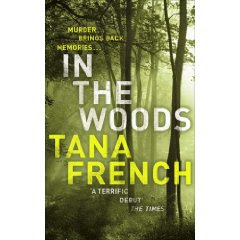
In the Woods

In the Woods by Tana French was somewhat of a departure for me; I don't read much Crime Fiction and, on the odd occasion that I do, I read the Classic Crime Fiction Masters: Arthur Conan Doyle, Wilkie Collins, and Edgar Allan Poe. However, I don't believe in "comfort zones" and read widely and eclectically and seek out literature that interests me, whatever the genre.

Here is its synopsis, courtesy of Waterstone's:

When he was twelve years old, Adam Ryan went playing in the woods one day with his two best friends. He never saw them again. Their bodies were never found, and Adam himself was discovered with his back pressed against an oak tree and his shoes filled with blood. He had no memory of what had happened. Twenty years on, Rob Ryan - the child who came back - is a detective in the Dublin police force. He's changed his name. No one knows about his past. Then a little girl's body is found at the site of the old tragedy and Rob is drawn back into the mystery. Knowing that he would be thrown off the case if his past were revealed, Rob takes a fateful decision to keep quiet but hopes that he might also solve the twenty-year-old mystery of the woods.

I was intrigued; I've been wanting to read this one for a while, especially as other bloggers had amazing things to say about it and I was delighted to pick up a copy from the library. Now I am feeling frustrated and annoyed that I spent a week struggling with 600 pages (and another 200 pages consisting of Olivia and half of Persuasion) when I have a leaning stack of books waiting to be read that is as tall as that famous tower in Pisa. Perhaps I am simply feeling overwhelmed and a little out of sorts today.

For the most part I enjoyed the novel. It was a welcome break to read something different, that was modern and also compelling. I was enthralled by the plot but not as much as I expected to be. It was suspenseful but I also thought that it devolved into the near-ridiculous. I was expecting ... more. So much was made of the 1984 crime and it ultimately never led anywhere; there were teases of the supernatural or of a psychological break or other countless possibilities and none of them led anywhere at all. I am disappointed. I feel as if I was led by the hand through a maze, excited at every twist and turn, to find myself led back through the way I entered, without actually discovering anything. I am frustrated with the way things were -or were not, as they case was- tied up and no, I do not expect everything to be presented to me tied in a bow but I do expect answers when I have invested time in following clues and looking for them.

The novel was engaging and well-written; some passages really had to be re-read because the writing was that good. I liked this passage, amogst a number of others:

The wood had never been so lush or so feral. Leaves threw off dazzles of sunlight like Catherine wheels and the colours were so bright you could live on them, the smell of fertile earth amplified to something heady as church wine. We shot through humming clouds of midges and leaped ditches and rotten logs, branches swirled around us like water, swallows trapezed across our path and in the trees alongside I swear three deer kept pace with us. I felt light and lucky and wild, I had never run so fast or jumped so effortlessly high; one shove of my foot and I could have been airborne.

French's literary prowess is at times exceedingly impressive but there was no need for it to carry on for close to 600 pages. By all means, provide us with an engaging thriller but there is such a thing as succinctness; there also another thing called editing. In the end I was so annoyed by the narrator and his neuroses and the dragging on of the plot that the anti-climactic nature of it was welcome because it was finally over and I could move onto a book that I could potentially enjoy thoroughly, instead of only in parts. The psychology at times was interesting; I liked the relationship between the detectives; I liked the characterisation, even of the filler characters; but overall I found that there was too much of everything: of description, of minor details, and of ideas, as if Tana French wanted so desperately to squeeze everything into this one book. Saying that, now she has a sequel and that is 700 pages long.

Wednesday, 8 July 2009

Persephone Reading Week


Last week I was Virago-green with envy of Cardigan Girl Verity at The B Files who had the opportunity to indulge in a week of reading Persephone books. Verity announced yesterday that she intends another week of Persephone during the last week of August and, this time, I intend to do the same. Considering that I already have two Persephones on my summer reading list then adding a handful more, that are waiting unread on the shelf, seems to be a surmountable task. Needless to say that this mini challenge will be rather fun and not at all a chore. As I am not as unbelievably quick a reader as Verity, it is unlikely that I will manage to read an entire Persephone each and every day but I should achieve it cumulatively (earlier this year I did successfully set out and complete a seven-books-in-seven-days challenge that I set myself). Moreover, some of the Persephones I have waiting for me are relatively short and manageable. The four Persephone titles that I definitely will be reading are the following:

Journal, Katherine Mansfield
Saplings, Noel Streatfeild
Flush, Virginia Woolf
A London Child of the 1870s, Molly Hughes

For the fifth book (the "week" being a working week from Monday to Friday), I have these to choose from:

Little Boy Lost, Marghanita Laski
Princes in the Land, Joanna Cannan
The Young Pretenders, Edith Henrietta Fowler

and the more lengthy:

Mariana, Monica Dickens
Hostages to Fortune, Elizabeth Cambridge

I am full of anticipation and looking forward to Persephone week. Will you be joining myself and Verity? Are there any of these titles that you particularly hope I will read and review? or those that you would recommend?

Tuesday, 7 July 2009

Teaser Tuesdays


Quote a couple of spoiler-free sentences from the book you’re reading to tempt others.

Cheating slightly by using the opening lines:

"What I warn you to remember is that I am a detective. Our relationship with truth is fundamental but cracked, refracting confusingly like fragmented glass."
In the Woods by Tana French

Monday, 6 July 2009

The Little Stranger Redux


I made my disappointed and frustrated feelings on Sarah Waters' latest -and much anticipated- novel, The Little Stranger here. However, hindsight and post-analysis can be a wonderful thing. I remain slightly disappointed and it is my least favourite of her novels; although the historical setting and social commentary were exceptionally well researched, they were too dry for me and the narrator Dr Faraday altogether too dull.

Reading insightful reviews by Savidge Reads and Dovegreyreader, and then Dovegreyreader's interview with Sarah Waters posted today, has persuaded me to re-examine the novel and my reaction towards it; it is rare that a negative impression of a book prompts such consternation in me but this one has. Simon suggested re-reading the closing line to make sense of the subtle and vague ending and I managed to do so recently (I, ahem, sold my copy of the novel, which is something I never do with hardbacks, especially those I was counting down the days until published). I urge you to re-read that closing line as it confirmed a hunch I had whilst reading the novel, but by the close of it I had almost stopped caring if it was correct or not. Re-reading that line and reading complimentary and illuminating reviews by others made it clear to me that I definitely missed something in the first reading. Upon further reflection and drawing comparisons with my favourite novel, Rebecca by Daphne Du Maurier, I now have more of an appreciation of the novel, of its nuances. I am now more disturbed by my potential limitations as a reader by giving it too linear a reading and being oblivious to some of its subtleties.... Perhaps it was my own expectations of the novel that let me down; The Little Stranger didn't live up to the high bar I had set for a beloved writer and in setting it so high I think I sold Sarah Waters short and consequently myself.

This is a peculiar blog post to write but I have been struggling with the thoughts over the last couple of weeks and thought that I should share them. The slow building of resonance with this novel has completely taken me by surprise and it has a lingering, haunting quality that is rather apt.

Sunday, 5 July 2009

Olivia by "Olivia"


I have mentioned previously my love for Virago Modern Classics and my burgeoning collection. Olivia by "Olivia", the pseudonym of Dorothy Strachey (sister of Lytton Strachey), was one of the Viragoes that I relentlessly hunted down in a rare green spine, and not merely for the beautiful cover featuring the Gustav Klimt painting, Mäda Primavesi. The synopsis for the novella intrigued me and I knew it would be one that I would enjoy reading. From the back cover:

In this famous novel, first published in 1949, a woman recollects an extraordinary year "when life was, if not at its fullest, at any rate at its most poignant . . . the year when I first became conscious of myself". Olivia is sixteen years old when she goes to Les Avons, a finishing school near Paris, run by two Mademoiselles. It is a place of few rules, of laughter and lively conversation -- a welcome surprise for a reserved young English girl. But the gaiety and freedom of Les Avons is only surface deep and emotional liaisons and jealousies form the hidden curriculum. Very quickly Olivia too is caught up in its spell, overwhelmed by her increasing infatuation with Mademoiselle Julie. Here she describes the powerful allegiances and repressed desires which smoulder at this secluded school, and the intensity and desperation of adolescent love.

Olivia, the protagonist, develops a crush on Mademoiselle Julie, who treats her as teacher's pet. Mademoiselle Clara is jealous and petty until her death, suicide or murder unclear. Olivia is a melodramatic potboiler of adolescent obsession but it is engaging and kept me occupied of a weekend afternoon. The language is quite lush at times, despite the hyperbole, and evokes the intoxicating passion of first "love", the fervent and all-consuming infatuation of a young girl for her teacher. Her rapture and ardor are intense and the pervasive alliances and jealousies of the Mademoiselles is insidious. The unsettling nature of the teachers reminded me of Jean Brodie.

I was also greatly reminded of Colette's Claudine à l'école, which was published more than thirty years prior to Olivia, but it was the latter that was considered ground-breaking and made its way onto the Publishing Triangle's 100 Best Gay & Lesbian Novels. Further reminders, albeit subtler, of convent rather than school set literature in Diderot's The Nun and VMC #1 Frost in May by Antonia White. Moreover, I realised that I still haven't read Lillian Hellman's 1934 play, The Children's Hour, nor watched the big-screen adaptation with Audrey Hepburn and Shirley McClaine, about the two boarding school headmistresses whose careers and lives are destroyed by a vindictive pupil who accuses them of Lesbianism.

Olivia was published anonymously by the Leonard and Virginia Woolf founded Hogarth Press in 1949. Rosamond Lehmann, another Virago Press author, was an enthusiastic supporter and perhaps found similarities with her own famous campus novel of lesbian attraction and affection, Dusty Answer.

I enjoyed Olivia and its capture of the intensity of teenage infatuation and crushes, although as Olivia says:

"My case was so different, so unheard of. Really no one had ever heard of a thing, except as a joke. Yes, people used to make joking allusions to "school-girl crushes". But I knew well enough that my "crush" was not a joke."

This holds particular resonance for me, as I am sure it would for anyone who was once a school-girl with a crush. Olivia's affection for Mademoiselle Julie, however, is ambiguously not necessarily a case of unrequited love.

I will leave you with a longer passage:

I have often wondered what share Racine had in lighting the flame that began to burn in my heart that night, or what share proximity. If she hadn't read just that play or if she hadn't called me up by chance to sit so near her, in such immediate contact, would be inflammable stuff which I carried so unsuspectingly within me have remained perhaps outside the radius of the kindling spark and never caught fire at all? But probably not; sooner or later, it was bound to happen.

Saturday, 4 July 2009

Book-centric Memories II


Following planning this year's summer reading, I remembered what I read last summer. This time last year I was en route to Florida for three weeks in the sun, in Disney World and on the Gulf Coast. When I wasn't meeting Mickey Mouse, tossing an American football in the Gulf of Mexico, or having barbeques with my boyfriend's family, I was lying in the sun reading or cooling off indoors with a book in hand. Nostalgic today, I am envious of my own self a year ago; the closest I will get to reading on the beach this year is potentially a day trip to Brighton.

Last summer's book choices were perfect. I enjoyed them all immensely and the enjoyment of the holiday itself definitely influenced my enjoyment of the books and the pleasure I experienced in reading contributed to my overall happiness throughout the holiday.

From the photograph above you can see that I read A Thousand Splendid Suns by Khaled Hosseini, which I had received as a Christmas gift seven months previously and stored up as an ideal summer read. Before that I read one of my Waterstone's Summer 3 for 2 books (I love indulging in this offer for holiday reading), The Private Lives of Pippa Lee by Rebecca Miller (daughter of Arthur Miller and wife of Daniel Day Lewis; the motion picture due to be released this July), which was darker than I expected but had a witty and wise writing style that I really liked. I followed this up with the incredibly engrossing The Return by Victoria Hislop, which was published just in time a few weeks earlier, and like her debut novel The Island, is a wonderfully compelling summer novel. After the engaging but often bleak A Thousand Splendid Suns (but evocative of heat and sand, especially when lying in them), I discovered Jonathan Coe for the first time by reading the haunting and resonant The Rain Before it Falls (another of my Waterstone's bargains) during some tropical thunderstorms that aleviated the humidity somewhat. Lastly I read my free book from Waterstone's -the one I actually intended to buy- The Bastard of Istanbul by Eli Shafak, which was a consuming and often disturbing family saga set in Turkey. All of my summer reading choices were relatively light yet absorbing. I also discovered the best independent bookshop whilst on the Gulf Coast but I intend to devote a future blog post to that experience.